Mid Year Reviews
Stop scrambling when mid-year reviews are due. Learn how tracking notes, wins, and feedback year-round makes reviews faster, fairer, and more useful for your team's development.

One Tool for Better Managers
Spreadsheets and legacy software are slowing your progress. ClarityBoss provides the streamlined tools and strategies you need to lead right now, with the built-in power to keep your team ahead of whatever the future brings.
Mid Year Reviews
Mid-year reviews sneak up fast. One day you’re planning Q2, and the next thing you know, review packets are due and you’re staring at a blank form trying to remember what your direct reports accomplished in March.
The problem isn’t that managers don’t care—it’s that we’re drowning in meetings, slack messages, and putting out fires. By the time reviews roll around, the details have vanished from memory. Team members deserve better than “you’re doing great, keep it up” and a hastily assembled list of projects.
Why Mid-Year Reviews Feel Like a Scramble
Most managers run into the same issues when review time hits:
The memory problem: You remember last week clearly. January? Not so much. Without notes, you’re guessing about the first half of the year.
The recency bias trap: Recent wins and problems dominate your thinking. Someone who crushed Q1 but had a rough Q2 looks worse than they should. It’s not fair, but it happens when you’re working from memory.
The scattered evidence: You know Sarah shipped something important and Jake mentored the new hire, but where are those details? Buried in Slack? Some email thread? A meeting note you can’t find?
The surprise factor: Your team member thinks they’re killing it. You think they’re missing the mark. Neither of you wrote anything down, so the review feels like an ambush instead of a conversation.
Mid-year reviews don’t have to be this way.
What Good Mid-Year Reviews Look Like
A solid mid-year review tells a story. It covers what someone accomplished, where they grew, what challenges came up, and what’s next. The conversation should feel like a continuation of ongoing 1-on-1s, not a once-a-year surprise.
Good reviews include:
- Specific examples with dates and context—“you led the API migration in April” beats “you’re a strong technical lead”
- Recognition of contributions that might otherwise get lost—the mentoring, the firefighting, the glue work that holds teams together
- Honest feedback about development areas, tied to actual situations
- A look ahead at goals for the second half, connected to career growth
The difference isn’t that some managers are naturally better at reviews. It’s that some managers keep better notes.
How ClarityBoss Makes Mid-Year Reviews Manageable
ClarityBoss isn’t performance management software. It’s a place to capture what happens as it happens, so you’re not scrambling when reviews are due.
Keep Notes in Context
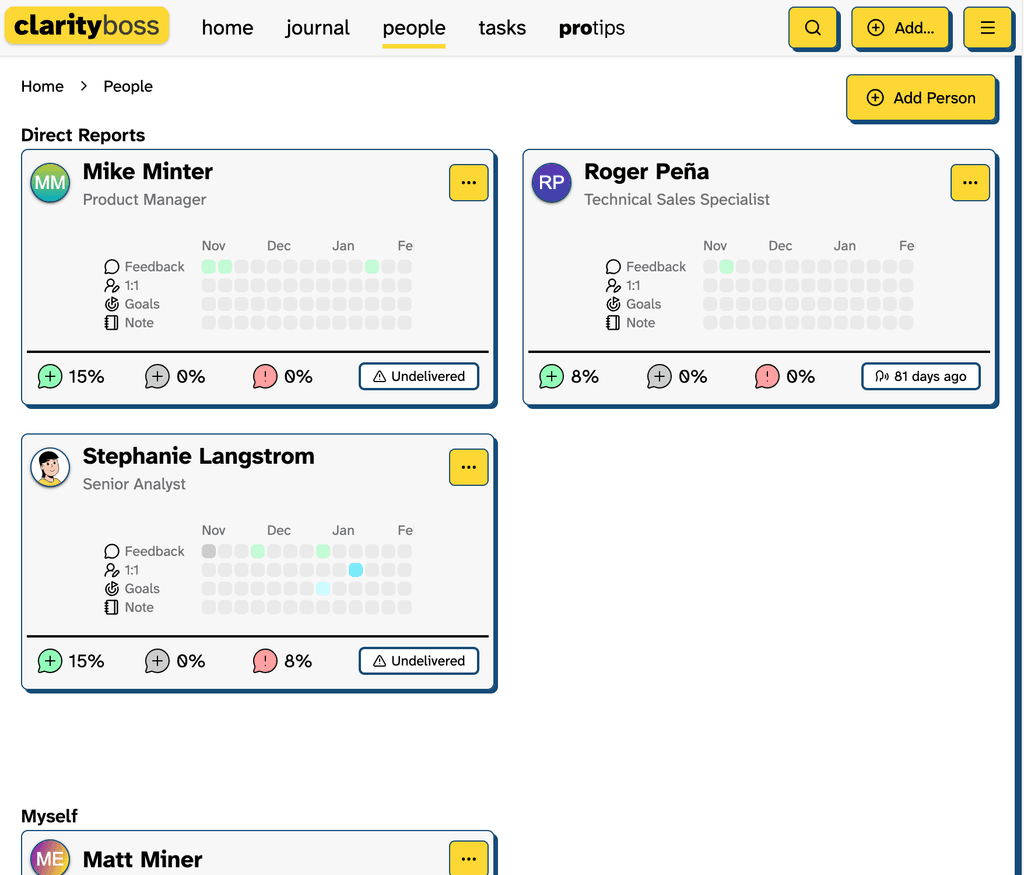
After a 1-on-1 where someone mentions they shipped a feature or handled a tough conversation, log it in their profile. Two sentences is enough. When June hits, you’ve got six months of context sitting there.
Track Wins as They Happen
Someone closes a big deal, fixes a production bug at midnight, or helps onboard a new teammate—write it down. By mid-year, you’ll have a list of contributions instead of a vague sense that “they did good work.”
Document Feedback in Real Time
If you give constructive feedback in April, note what you discussed and what they committed to change. At mid-year, you can talk about progress instead of rehashing the same issue like it’s new.
Surface Career Goals and Development Plans
Most career conversations happen sporadically. When you track someone’s interests—“wants to present at the engineering all-hands,” “interested in moving into management someday”—you can reference those goals during reviews and show you’ve been paying attention.
Set Follow-Up Reminders
Maybe someone’s working on improving their delegation skills. Set a reminder to check in next month. By mid-year, you’ve got a development story instead of one conversation that went nowhere.
Sample Mid-Year Review Flow With ClarityBoss
Week before reviews due:
Pull up each person’s profile. You’ve got notes from 1-on-1s, logged wins, feedback conversations, and project updates from the whole half.
Writing the review:
Open the draft form. Copy relevant notes and examples. Fill in accomplishments with actual dates and details. Write development feedback tied to specific situations. Takes 20 minutes per person instead of two hours.
The conversation:
Nothing in your review surprises them because you’ve been discussing this stuff all along. They bring up points you documented. You reference their March goal about skill development. It’s a conversation, not a monologue.
Second half planning:
You’ve got notes about what they want to work on. Together you set Q3/Q4 goals that connect to their career trajectory. You create reminders to check progress.
What Happens When You Skip the Notes
No one sets out to be a bad manager. But when review time comes and you’ve got nothing written down:
- You rely on whatever’s freshest in memory
- High performers who are quiet get overlooked compared to whoever’s been visible lately
- You write generic feedback because you don’t have specifics
- Team members feel blindsided by problems you “should have mentioned earlier”
- You scramble to backfill examples and end up padding reviews with weak content
The review becomes something you’re doing to your team instead of something useful for their growth.
Start Simple: Your First 30 Days
You don’t need to overhaul your whole process. Start small:
Week 1: Add your team to ClarityBoss. For each person, write down one current project and one thing you know they want to develop.
Week 2: After each 1-on-1, spend 60 seconds logging one key point—a win, a concern, a goal mentioned, whatever stood out.
Week 3: When you see someone do something worth recognizing, log it immediately. Literally takes 30 seconds.
Week 4: Set a reminder to check in with each team member monthly about their goals or development areas.
By mid-year, you’ll have half a year of actual context instead of starting from scratch.
The Real Benefit: Better Management Year-Round
The mid-year review is just the visible moment. What matters more is that keeping regular notes makes you a better manager every week.
You remember to follow up on commitments. You notice patterns in someone’s work or growth. You can give specific recognition instead of generic praise. You spot when someone’s engagement shifts before they disengage completely.
ClarityBoss isn’t about making reviews easier—though it does. It’s about building the habit of paying attention and writing things down so your team knows you’re paying attention.
Because at the end of the day, people don’t leave jobs—they leave managers who don’t seem to notice or care what they’re contributing. Mid-year reviews are where that either shows up clearly or breaks down completely.
Frequently Asked Questions
-
How can managers prepare for mid-year reviews more efficiently?
Track notes, wins, and feedback continuously throughout the year instead of trying to remember everything when reviews are due. ClarityBoss helps managers log context after 1-on-1s and capture contributions as they happen, making review prep take minutes instead of hours. -
What should managers include in mid-year reviews?
Effective mid-year reviews include specific accomplishments with dates and context, development progress since the last review, honest feedback tied to real situations, recognition of often-overlooked contributions, and forward-looking goals for the second half of the year. -
How do you avoid recency bias in performance reviews?
Keep running notes throughout the entire review period. ClarityBoss helps managers document wins, challenges, and feedback from January through June so recent events don't overshadow earlier accomplishments or issues. -
How often should managers document employee performance?
The best practice is logging context immediately after 1-on-1s and capturing notable contributions when they happen. Even 60 seconds of notes per week creates a detailed performance picture by mid-year without adding administrative burden. -
What's the biggest mistake managers make during mid-year reviews?
Working from memory instead of documentation. This leads to generic feedback, overlooked achievements, recency bias, and team members feeling blindsided. Managers who track context year-round deliver fairer, more useful reviews. -
How can ClarityBoss help with mid-year review conversations?
ClarityBoss surfaces six months of notes, tracked wins, development conversations, and goals in one place. Reviews become collaborative conversations instead of surprise evaluations because everything discussed has been building throughout the year.
Book a Demo With a Founder